
How Gaming Regulators Vet Casino Software Providers Before Licensing
§ 26.25 · Marc-André Fortin ·
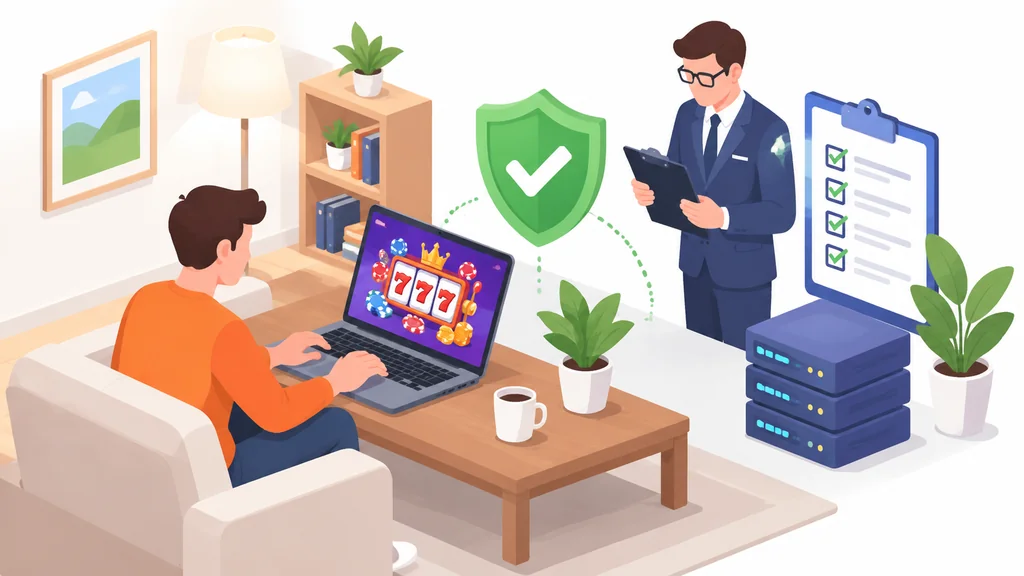
Casino software licensing is the process by which a gambling regulator assesses a provider’s platform, random number generator and audit trail before the company may supply licensed operators. The vetting may involve several channels at once, including technical certification by an accredited testing laboratory, background and financial due diligence on the people behind the company, and ongoing monitoring once the licence is live.
What Casino Software Licensing Actually Covers
A software licence is not one approval. It is a bundle of permissions, and each one is examined separately.
The regulator wants to know that the product behaves as advertised. That means the random number generator, the game rules, the payout percentages and the back-office reporting all have to be demonstrable. A provider that can show its maths and its logs is in a very different position from one that can only show a polished front end.
Licensing also binds the provider to the operator. When a casino runs a slot, the regulator needs a clear chain of responsibility between the game studio, the platform, the payment flow and the licensee. Software supply agreements are therefore reviewed for who is accountable when something fails.
The practical consequence for players is simple. A game that reaches you through a properly licensed supply chain has been examined by someone other than the company selling it, which is the whole point of the exercise.
The Testing Laboratory Is the First Gate
Some regulators do not test code themselves. They delegate technical examination to accredited laboratories, and the laboratory’s report becomes a central part of the licence file.
Testing houses such as GLI work through defined certification schemes. GLI documents its Product Certification Scheme, which covers the Complaints and Appeals process, under the reference PC-QS-011. That reference matters because it shows the scheme has a formal route for a provider to challenge a finding, which keeps the process auditable from both sides.
A typical technical review covers the random number generator, the game logic, the paytable, the reporting interface and the way the software handles a lost connection mid-round. Laboratories also run statistical tests on the output. The methods are established and repeatable, so a provider cannot argue its way past a failing generator with a good demo.
The report is not a rubber stamp. Regulators can send findings back, ask for a re-test, or refuse a licence where the laboratory’s conclusions are not satisfactory.

Source Code Review and the Black Box Question
The most sensitive part of vetting is access to source code. Regulators and their laboratories may require it under confidentiality, allowing them to inspect the logic and the behaviour together.
Why does that matter? Because output testing shows that a generator produces plausible numbers. Code review shows whether the generator can be manipulated, whether a game can be switched to a different paytable after launch, and whether the reporting matches what the player actually experienced.
Where full code access is not granted, regulators rely on a black box approach. The laboratory tests the compiled product as a player would encounter it, then compares results against the provider’s stated specifications. The weakness is obvious. Black box testing cannot prove that a hidden configuration will never be activated.
The file that comes out of this stage is detailed. It records the version tested, the configuration reviewed and the conditions under which the approval holds. Change the software, and the approval often has to be revisited.
Corporate Due Diligence on the People Behind the Software
A technically perfect product can still fail licensing if the company behind it does not survive scrutiny.
Regulators examine the ownership structure, the directors and the beneficial owners. They look at criminal records, past regulatory action in other markets, and the source of the capital used to build the business. This is where a provider with an opaque holding chain in several jurisdictions runs into trouble.
Financial standing is part of the same review. A software supplier that cannot fund its own support obligations, or that depends on a single operator for survival, is a risk to the licensees who rely on it. Regulators ask for accounts, business plans and evidence of continuity arrangements.
Personal integrity checks extend to key technical staff in some regimes, particularly where those people control the generator or the reporting systems. The logic is that a licence is granted to people as much as to code.
Jurisdiction by Jurisdiction: Why Approvals Do Not Travel Automatically
There is no single global software licence. Approval processes differ between regulators, and an approval in one market may carry limited weight in another.
A provider certified in one market may still need fresh testing in another, because the technical standards, the reporting requirements and the responsible gambling obligations can differ. A studio launching in several markets often holds a stack of separate certificates.
This is why large suppliers employ compliance teams whose entire job is tracking which version of which game is approved where. It also explains why a game can appear at one casino and not another on the same day.
For players, the useful takeaway is that the logo at the bottom of a casino page should be read together with the jurisdiction it names. A licence from a recognised authority tells you something concrete about the software supply chain, which is a theme worth following through the site’s guide to player rights and protections at licensed Canadian online casinos.

Ongoing Monitoring After the Licence Is Granted
Licensing is not a one-time event. Once a provider is approved, the regulator may maintain ongoing oversight.
Change control is the core of it. A material update to the generator, the paytable or the reporting interface may trigger a notification requirement, and significant changes may need re-certification before release. A provider that quietly ships a new maths model is exposed the moment an audit compares the live version against the approved one.
Live monitoring adds a second layer. Regulators may receive game data, payout information and complaint records, and laboratories can be asked to re-test a product after a period of operation. Where a pattern of player complaints clusters around one supplier, that supplier’s file gets attention.
There is also the appeal and dispute machinery. A provider that disagrees with a laboratory finding uses the formal complaints route rather than informal pressure, which is why scheme references such as PC-QS-011 appear in licensing documentation. The process is designed to be recorded.
What Players Can Check Themselves
You cannot audit a random number generator from your sofa, but you can verify the parts of the chain that are public.
Start with the licence. Where a public register is available, find the regulator named in the casino’s footer and confirm the operator appears in it. Then look at the game itself. Reputable providers publish their certification status and the laboratories that tested them.
Read the bonus terms before you accept anything, because the software’s behaviour around wagering is where players most often get surprised. The site’s breakdown of welcome bonus fine print clauses players skip is a good companion to any licensing check.
Finally, keep records. If the outcome of a session looks wrong, a screenshot plus a timestamp is far more useful to a regulator than a memory. How winnings are treated at tax time is a separate question, covered in the guide to taxation and online casino winnings in Canada.
A Practical Sequence for Providers Preparing to Apply
If you are on the supplier side, the order of work matters more than the speed.
- Map every jurisdiction you intend to serve and list the technical standards each one applies.
- Engage an accredited laboratory early and agree the scope of testing before you build the final release.
- Freeze the source code and configuration that will be submitted, and record the exact version.
- Prepare ownership, director and financial documentation for the due diligence stage in parallel with testing.
- Build a change control procedure that flags any modification which could affect certified behaviour.
- Set up a complaints and appeals file that mirrors the laboratory’s scheme requirements.
- Keep the approval records per market, per product and per version, and review them before every release.
Most delays at this stage come from treating the technical and corporate tracks as sequential. They run at the same time, and a gap in either one holds up the licence.

Where Providers Commonly Fail
The same problems recur across applications.
Documentation that does not match the software is the most frequent. A specification written months before the final build, with a paytable that has since changed, undermines confidence in everything else in the file. Regulators read inconsistency as a control failure.
Second is an opaque ownership structure. Layered holding companies across several countries slow down due diligence and invite deeper questions. Providers that present a clean corporate chart clear this stage faster.
Third is change management. A supplier that cannot demonstrate who approved a configuration change, and when, will struggle to convince a regulator that the certified version is the one in production.
Fourth is treating the laboratory as an adversary. The appeals route exists for genuine disagreements, but a pattern of challenges to every finding tends to extend the process rather than shorten it.
When to Call a Specialist
Licensing work is not a solo project. Compliance consultants, gambling lawyers and the laboratories themselves all play a role, and the sensible moment to bring them in is before the application is drafted.
Call a specialist when you are entering a new market with unfamiliar technical standards, when your ownership structure is complex, or when a previous application has been refused or delayed. A consultant who has taken a product through the same regulator before will know which documents get scrutinised and in what order.
The cost of advice is easier to justify than the cost of a failed application, which usually means resubmission, fresh testing fees and months of lost market access.
Casino Software Licensing FAQ
Does a laboratory certificate mean the provider is licensed?
No. A certificate is evidence submitted to the regulator. The regulator issues the licence after considering it. The regulator decides, weighing the technical report alongside due diligence on the company and its owners.
Can a regulator withdraw a software approval after launch?
Yes. In many regimes, approvals are conditional on the certified version staying in production and on the provider meeting ongoing reporting and change notification duties. A material unapproved change may trigger suspension.
Why do providers need separate approvals for different countries?
Requirements can vary by jurisdiction, including technical standards, reporting formats and responsible gambling obligations. A certificate issued for one market is treated as supporting evidence elsewhere. Each other market may require its own approval.
What happens if a provider fails a random number generator test?
The laboratory records the finding and the provider can use the formal complaints and appeals process defined in the certification scheme. In practice most failures are resolved by correcting the software and resubmitting for re-test.
Is source code always handed to the regulator?
Not always. Some regimes require code or configuration escrow, others rely on black box testing of the compiled product.

Bylaw Desk — editorial byline